
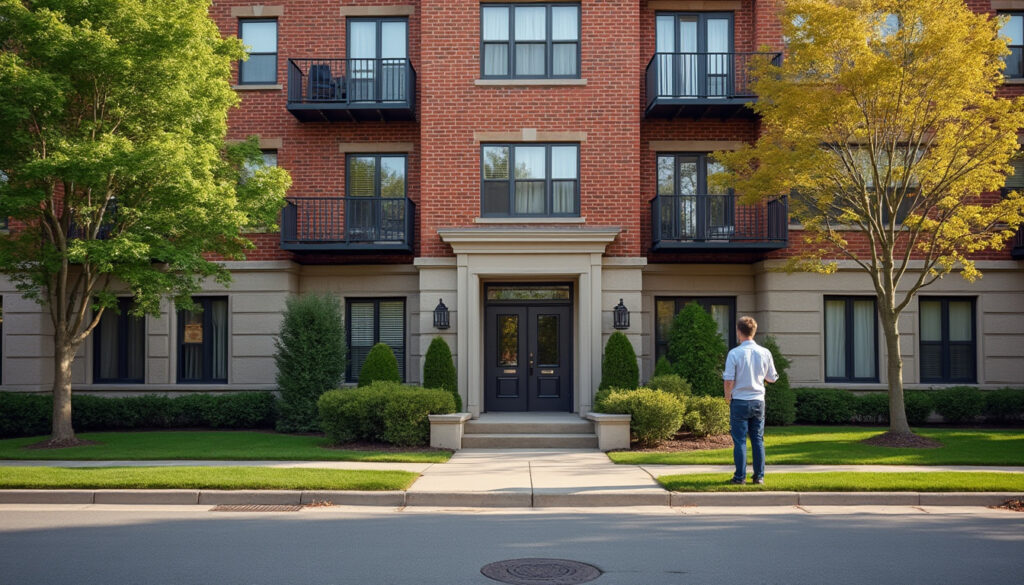
Hello, this is Patrick. Over 20 years, the most robust rental strategy is based on a well-located property, a long-term rental and sustainable financing, rather than pursuing the highest gross yield.
A yield of around 4% can serve as a benchmark, but results often range from 3% to 8%, depending on the market, expenses and rental approach. To assess a real estate investment, track actual cash flows, plan for repairs and measure rental profitability over the entire holding period.
What to do right away
- Check local rental demand based on rents actually being charged and the time it takes to find a new tenant.
- Calculate the net yield by factoring in property tax, insurance, condominium fees, management, maintenance and vacancy.
- Compare long-term and furnished rentals after accounting for expenses, taxes and management time.
- Test three scenarios: conservative, base case and favorable, including increased expenses or a period without a tenant.
- Model the mortgage and repairs to make sure your real estate cash flow remains manageable.
To build sound projections, start with a method that avoids misleading calculations, then compare it with a close analysis of the local market. These two perspectives help distinguish a sound rental strategy from a yield that looks attractive only on paper.
What rental strategy can hold up over twenty years?
A sustainable strategy does not depend on a single factor. It combines a location with diverse and lasting demand, a home that is easy to maintain, and financing that leaves room in the budget when rents do not cover all expenses.
Long-term rentals often offer greater stability and fewer tenant turnovers. Furnished rentals can generate higher rents in some areas, but generally involve more frequent lease renewals, furnishings and property management.
Real estate yield alone is not enough to decide
Gross yield is calculated by dividing annual rent by the purchase price. It provides an initial benchmark, but does not account for expenses or periods without a tenant.
Net yield refines the estimate by deducting ongoing expenses. For a twenty-year horizon, IRR adds to this analysis: it takes rents, repairs, the mortgage and resale value over time into account.
| Metric | What it measures | Use over twenty years |
|---|---|---|
| Gross yield | Annual rent as a proportion of the purchase price | Quickly compare several properties |
| Net yield | Income after estimated recurring expenses | Assess rental income more accurately |
| Cash flow | Cash inflows and outflows, including the mortgage | Check the monthly amount you will need to contribute |
| IRR | Performance of cash flows and resale over time | Compare strategies over the same time horizon |
A gross yield of 4% does not mean that 4% of the capital goes into the owner’s pocket each year. Expenses, interest, taxes and repairs can significantly reduce the return.
Long-term or furnished rental: what is the right balance?
The choice depends on the neighborhood, the tenant profile and your ability to manage tenant turnover. An apartment near public transit, a campus or an employment center may be suitable for furnished rentals; a family home in a residential area may be a better fit for a long-term rental.
Furnished rentals are not automatically more profitable once replacement furnishings, vacancy periods and property taxes are factored in. Conversely, a more moderate rent from an unfurnished rental may provide more stable occupancy and reduce the management workload.
A worked example comparing the two options
Imagine an apartment purchased for €200,000 that brings in €850 per month as a long-term rental. Annual rent comes to €10,200, for a gross yield of 5.1% before expenses, taxes and financing.
If non-recoverable expenses, insurance, maintenance and a vacancy allowance total €3,000 per year, income before mortgage payments and taxes falls to €7,200, or 3.6% of the purchase price. A furnished rental is preferable only if its additional income genuinely offsets its costs and potentially more frequent tenant turnover.
The right choice is the one that remains viable under conservative assumptions, not the one showing the highest theoretical rent.
Build real estate wealth without straining your budget
A mortgage can accelerate wealth-building if the property generates enough income and the borrower can absorb a temporary shortfall. But leverage can also magnify difficulties: a vacancy, major repair or increase in financing costs can put pressure on the budget.
A mortgage repaid over a long period can eventually leave you with a less leveraged asset and rental income at your disposal. However, this depends on the purchase price, income consistency, repairs and resale conditions; it is not a guarantee of profit.
Property management is part of the return
The quality of management directly affects vacancy periods, the prevention of missed payments and property maintenance. Owners can manage the property themselves or hire a property manager, but any fees should be included in the calculations from the outset.
Analytical tools, including artificial intelligence, can help compare rents, identify trends or test assumptions. They do not replace checking local data, applicable rules and the property’s actual condition.
A three-step process for testing your strategy
- Set out realistic cash flows. List the total acquisition price, mortgage, plausible rents, expenses, taxes, repairs and a reserve for unexpected costs.
- Compare several scenarios. Vary vacancy, maintenance expenses, rents and resale price. If the project only works in the favorable scenario, the safety margin is insufficient.
- Review it every year. Update rents, expenses, regulations and the property’s value. Adjust your strategy as the numbers or your goals change.
A twenty-year projection should distinguish annual yield from the final wealth outcome. IRR helps bring these cash flows together, but it remains sensitive to resale assumptions and should be interpreted with caution.
Risks that can reduce rental profitability
Vacancies and missed rent payments reduce income, while unexpected repairs can weigh heavily on real estate cash flow. A financial reserve and careful tenant screening can reduce the impact of these risks, but not eliminate them.
Rental rules and housing requirements can also change. Before buying, check the restrictions that apply to the property and factor in the expenses needed to keep it in good condition and compliant.
A resilient project is not one that ignores risks, but one that retains a margin of safety when forecasts fall short.
What rental yield should you aim for over twenty years?
A yield of around 4% can serve as a benchmark for a balanced project, but results often vary depending on the city, property, expenses and rental approach. Always compare gross yield with net yield and IRR.
Are furnished rentals more profitable than long-term rentals?
Not necessarily. Rents may be higher for furnished properties, but furnishing costs, tenant turnover, vacancy and taxes must be included in the calculation.
How do you measure a real estate investment over twenty years?
Set out the rental income, expenses, mortgage payments, repair costs and resale proceeds, then calculate net yield and IRR using conservative assumptions. Also stress-test cash flow for vacancies or unexpected expenses.
Can artificial intelligence help you choose a rental property?
It can make it easier to compare data and model scenarios, but the results must be checked against reliable local information and a human assessment of the property, neighborhood and applicable rules.
I hope you found these tips helpful. See you soon! — Patrick