
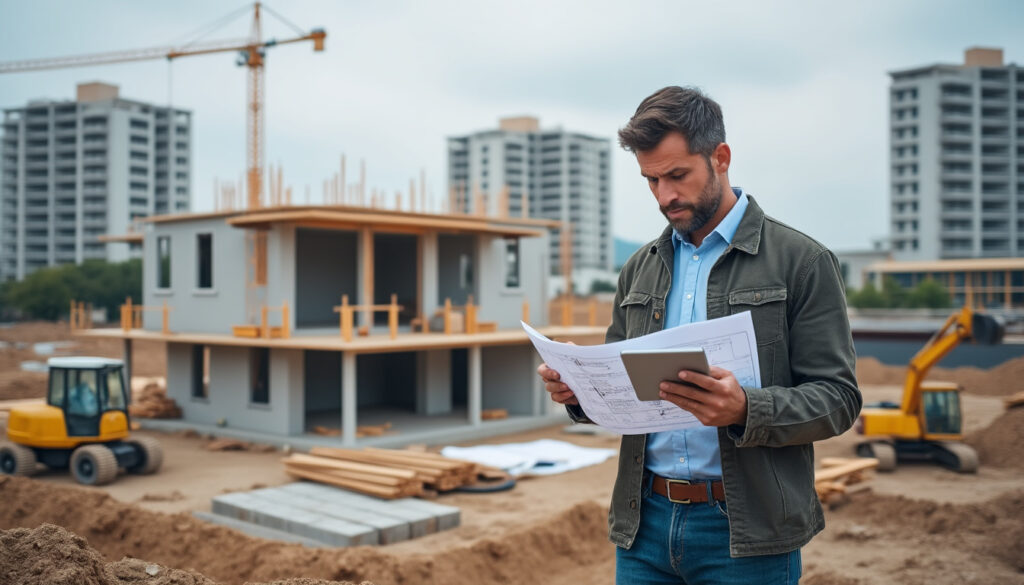
Hi everyone, it’s Patrick. To get a commercial real estate development off the ground on a small budget, scale down the project, validate local demand, and move forward in stages before committing to major expenses. The costliest mistakes often stem from overly optimistic assumptions, a poorly chosen site, or an incomplete budget. Here are seven pitfalls to watch out for to protect your cash flow and aim for realistic real estate profitability.
What to do right away:
Start by checking demand, zoning regulations, and connection costs before making any purchase commitment. For more information, see this guide to mistakes to avoid in a commercial area and these tips on planning a commercial construction project.
- Set a spending cap and keep a reserve for unexpected expenses.
- Talk to local business owners and prospective customers.
- Check the local zoning plan, access, utilities, and required permits.
- Compare several rental and marketing scenarios.
- Test an offer or a pilot space before developing the entire site.
7 mistakes that can derail a small-budget real estate project
A modest project doesn’t need to imitate a large shopping center. Instead, it should focus its resources on the location, the offering, and the expenses that genuinely improve how the place is used.
1. Overestimating local demand
A large population shown on a map doesn’t guarantee an accessible customer base. Railway lines, congested roads, or detours can significantly reduce the actual catchment area.
Before investing, observe traffic at different times of the week and identify direct competitors as well as indirect alternatives, including online sales. An independent market study helps test forecasts instead of simply confirming the project owner’s intuition.
2. Buying land before checking the regulations
Zoning, permitted floor areas, access requirements, and environmental constraints can turn a good deal into a sunk cost. Review the planning documents and seek professional advice before signing.
Rules on accessibility, fire safety, stormwater, and energy can also affect construction costs. Checking regulations upfront generally costs less than having an application rejected or construction work redone.
3. Forgetting about hidden costs
The price of the land and construction costs aren’t the whole picture. You also need to estimate utility connections, studies, insurance, taxes, financing fees, and costs related to delays.
With prudent budget management, set aside a contingency of around 10 to 20%, depending on the site, the level of planning, and the type of work. This buffer doesn’t replace a careful cost estimate: it helps absorb unexpected issues without stopping the project at the first setback.
4. Choosing a concept that’s too ambitious for your means
Adding multiple units, services, and amenities from the outset increases the risk of vacant spaces. For a small-budget real estate project, it’s better to offer a compact mix tailored to the neighborhood and able to evolve with demand.
A targeted commercial strategy can start with a few flexible spaces and complementary uses. The goal isn’t to fill them quickly at any cost, but to give people a clear reason to visit.
5. Neglecting real estate prospecting
Waiting for good tenants to come forward slows the start of operations. Real estate prospecting should begin early: identify the types of businesses you’re looking for, contact local businesses, and check that they can meet the terms of a lease.
A story sums up the pitfall well: a small developer had finished construction before approaching neighborhood businesses. They then discovered that several prospective tenants needed delivery access that wasn’t included in the plans.
6. Underestimating marketing and events
New premises don’t automatically attract foot traffic. Real estate marketing, signage, online visibility, and a few local events can help visitors discover the site and come back.
Focus spending on measurable activities: a local page, a targeted campaign, low-cost events, and tracking inquiries. “What you don’t measure is hard to manage”: compare visits, inquiries, and signed leases to fine-tune your decisions.
7. Forgetting to plan for growth
Building the entire development at once ties up more capital and makes mistakes harder to fix. Gradual commercial growth lets you test demand, improve the offering, and then add space if the initial results justify it.
If the neighborhood already has plenty of foot traffic, start by securing a few complementary tenants and launching a small pilot offering. If demand is still uncertain, prioritize on-the-ground research and limited commitments before starting construction.
Compare the risks before committing to expenses
Profitability depends less on the size of the project than on the fit between location, costs, and customers. This table helps identify the first checks to carry out.
| Mistake | Risk to the budget | Priority action |
|---|---|---|
| Overestimating demand | Vacant spaces and insufficient revenue | Test traffic and competition |
| Failing to properly check the site | Delays, rejections, or additional construction work | Check zoning and technical constraints |
| Incomplete cost estimates | Unexpected financing needs | Estimate ancillary costs and keep a reserve |
| Overly ambitious offering | Capital tied up without sufficient demand | Start with a pilot format |
| Looking for tenants too late | Delayed opening and lost revenue | Start customer acquisition and prospecting early |
A 3-step method to reduce project risks
- Step 1 — Validate the market. Meet with business owners, observe traffic, and assess the competition. Set a minimum demand threshold before moving forward.
- Step 2 — Cost out the entire project. Include the land, construction, studies, carrying costs, and a contingency suited to the situation. Compare several scenarios, from the most cautious to the most ambitious.
- Step 3 — Launch in phases. Secure your first tenants, fit out the priority spaces, and measure the results before expanding.
This approach provides a framework for making decisions without claiming to eliminate all risks. The right project is one where the next expenses depend on observable results, not just attractive forecasts.
Useful questions before starting a commercial development
What budget should I plan for a small commercial project?
The amount depends on the land, construction, utility connections, and local regulations. Prepare a complete cost estimate and keep a contingency suited to the situation, often around 10 to 20% depending on the level of uncertainty.
How can I test demand before building?
Talk to business owners and residents, observe traffic at different times, and identify competing options. A pilot offering or preliminary commitments from tenants can also help validate the market.
What mistake can derail a project most quickly?
Buying land without checking zoning can tie up the budget and prevent the planned development from being built. Check permitted uses, access, and technical constraints before committing.
How can I improve real estate profitability with limited resources?
Focus spending on the location, appropriately sized spaces, and an offering that serves the neighborhood. Start in phases, measure the results, and only add investments once demand has been validated.
Thanks for reading this far; Patrick